

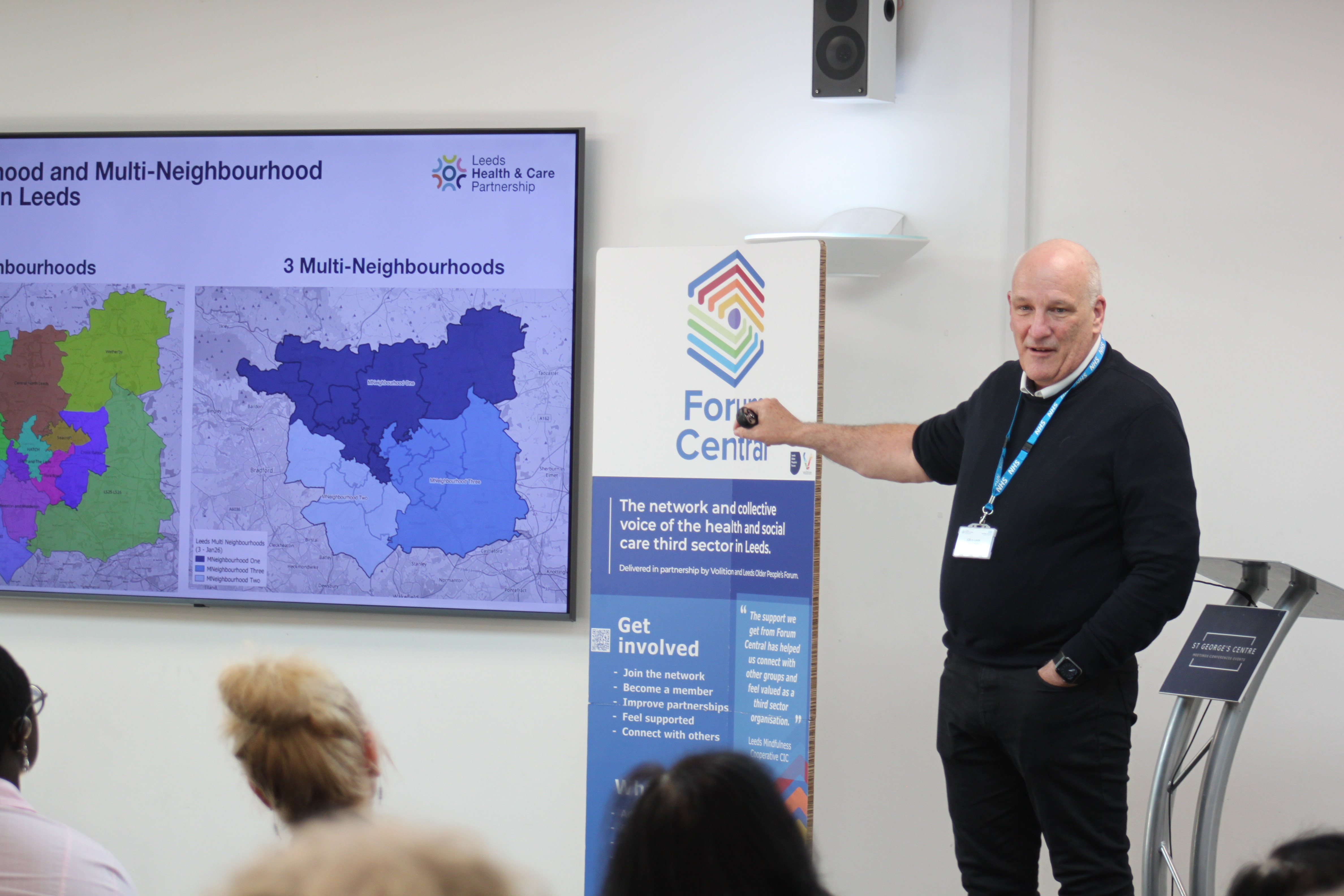
On 30 April 2026, third sector leaders from across Leeds came together for a Health and Care session that created space to step back and look at where the system is heading. A key part of the discussion came from Tim Ryley, currently West Yorkshire ICB Accountable Officer (Leeds) and Leeds Provider Partnership Director Designate.
Rather than focusing on detail, the session helped build a shared understanding of the direction of travel and what it could mean in practice for organisations across the city.
A System That Is Changing Shape
One of the clearest takeaways was how much the NHS structure has already changed and continues to change. The role of the Integrated Care Board is shifting towards being a strategic commissioner, focused on understanding population need, setting direction and allocating resource, rather than directly managing delivery
In simple terms, this means more responsibility for delivery sits elsewhere. Increasingly, that includes partnerships, providers and local systems working closer to communities.
You can see how this is already being reflected locally in another post we made about the transition to VCSE leadership and also found on another broader page about health and care.
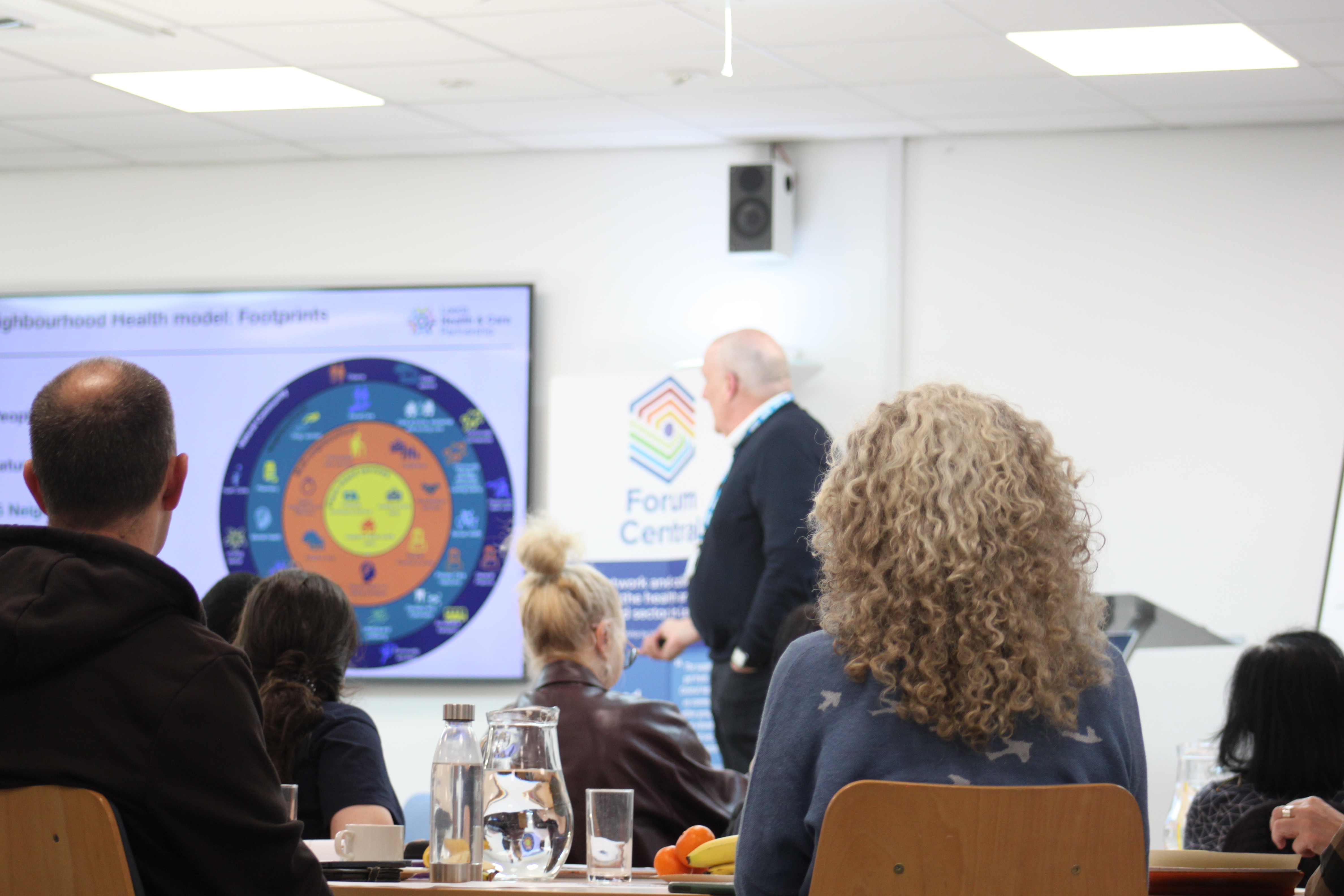
Neighbourhoods at the Centre
A big part of this shift is the move towards neighbourhood health. In Leeds, this is being organised around 15 neighbourhoods and 3 larger multi-neighbourhood areas.
The idea is straightforward. Services are designed around people and place, rather than organisations. Delivery happens closer to where people live, with different partners working together around shared populations.
Importantly, this model explicitly includes the third sector alongside GPs, NHS providers and councils as part of neighbourhood delivery.
This aligns closely with how many VCSE organisations already work, rooted in communities, responsive to local need, and often connecting people to multiple forms of support at once.
Link to what neighbourhood health means for the third sector in Leeds
Neighbourhood health third sector position statement
From Structure to Reality
Alongside the structural changes, there was an honest acknowledgement of the pressures facing the system. Demand is rising, resources are constrained, and organisations across health and care are having to adapt quickly.
The move towards prevention and earlier support is part of that response, but it only works if there is real capacity at community level.
There is already strong evidence that community organisations play a critical role here, particularly in reaching people who may not engage with traditional services.
Keep it local report and national commissioning guide
At the same time, there are practical challenges around workforce, data, digital systems and how organisations connect into a more integrated model.
Leeds community healthcare refreshed third sector strategy for 2024-2027
A Question for the Sector
One of the most important parts of the session wasn’t a statement, but a question.
As other parts of the system become more organised and aligned to this model, what does that mean for the third sector? How does it come together, influence decisions and play a full role as a partner?
This isn’t about changing what organisations do day to day. It is about how the sector connects, represents itself and works collectively within a changing system.
What This Means in Practice
For many VCSE organisations, this direction of travel will feel familiar. The focus on relationships, trust, local knowledge and early support is already at the heart of much of the work happening across Leeds.
The difference now is that this role is becoming more visible and more central to how the system is expected to function.
There is a clear opportunity here. Not to do more for the sake of it, but to build on what already exists, strengthen connections, and ensure that community-based work is recognised as part of the wider system, not separate from it.
A Shared Direction
This is a long-term shift rather than a single change. It will take time to work through, and there are still open questions about how it will operate in practice.
What is clear is that neighbourhood health, prevention and partnership working are not going away. The system is moving in that direction, and the VCSE sector is already a key part of making it work.
The challenge now is to stay connected to these conversations, shape what comes next, and continue building a system that works with communities, not around them.
