

Vaccination remains one of the most effective ways to prevent serious illness and protect population health. However, in Leeds, uptake across several routine vaccinations remains below the 95% level recommended by the World Health Organisation to prevent outbreaks.
This is not a new issue, but it is a growing one. Local data shows that vaccination coverage has declined since before the COVID-19 pandemic, with Leeds often performing below both the national average and the West Yorkshire Integrated Care Board average.
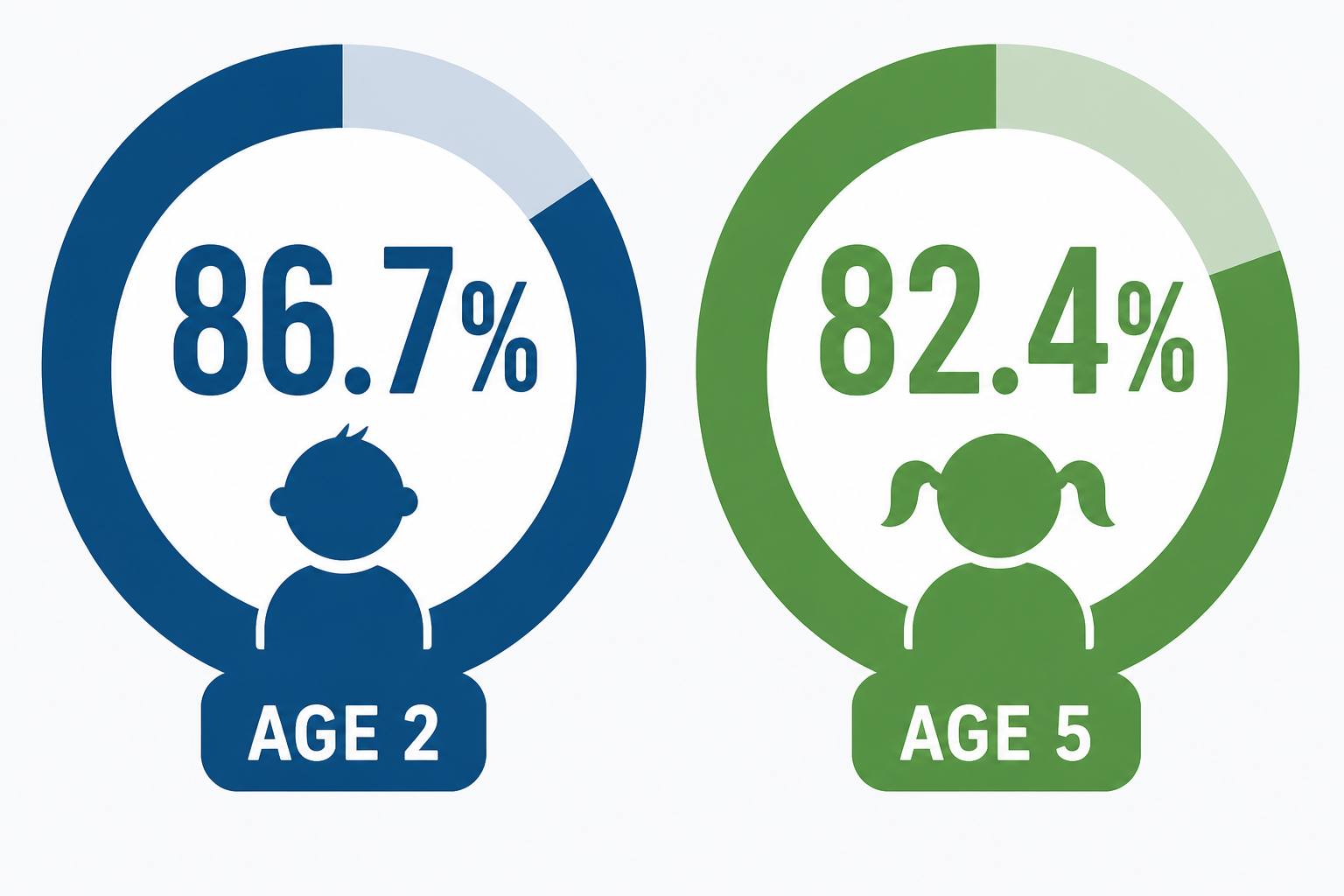
More recent figures reinforce this trend, with MMR coverage dropping to around 86.7% at age two and 82.4% at age five, well below the threshold needed to prevent outbreaks.
At the same time, there is a clear shift across the system towards prevention, early intervention and neighbourhood-based approaches to health. This is where community organisations are not just involved, but essential.
A Community-Centred Approach
The latest Director of Public Health Annual Report for Leeds places community organisations at the centre of improving health outcomes across the city. It highlights the role of community-led approaches in reaching people who are less likely to access traditional services, particularly in areas experiencing the greatest health inequalities. Programmes such as Better Together demonstrate how working through local organisations can engage residents at scale and support healthier lives.
You can read more about this wider approach here.
This sits alongside system-level commitments. The Leeds Council Plan 2026 to 2030 includes actions to expand community outreach, including recruiting and training at least 130 community champions and supporting over 100 frontline workers to build vaccine confidence.
Across Leeds, this approach is already in place. Through trusted relationships, local knowledge and consistent presence in communities, the Third Sector is often the first point of contact for people who may be hesitant, unsure or excluded from mainstream health messaging. This work is not always visible, but it is essential.
Why vaccinations matter
Vaccination is not just a clinical issue. It is shaped by trust, access, language, culture and confidence.
For many communities, barriers include difficulty accessing appointments, uncertainty about vaccine safety, language and communication challenges, and previous experiences that reduce trust in services. These challenges are closely linked to wider inequalities across the city. In Leeds, the gap in life expectancy between different areas can be as much as 12.9 years, highlighting the scale of variation in health outcomes between neighbourhoods.
These are not issues that can be solved by the NHS alone. They require local, relationship-based approaches that many community organisations are already delivering.
What This Looks Like in Practice
This approach is already visible across Leeds in how vaccination work is delivered.
Community-based clinics continue to reach people who miss school or GP appointments, using accessible local venues and targeted outreach to ensure families can attend.
Alongside this, Forum Central has supported the promotion of key vaccination programmes, including the COVID-19 Spring Booster and RSV rollout, helping ensure information reaches organisations working with higher-risk groups.
Programmes such as Community Vaccine Champions go further, enabling local organisations to engage directly with communities, support conversations around vaccine confidence, and help people navigate access to services in ways that are relevant and trusted.
Together, these examples reflect a wider shift towards neighbourhood health, where support is delivered closer to where people live and through organisations they already trust.
What This Means for Community Organisations
For community organisations, this is not a new direction, but it does create an opportunity to build on existing work and play a more visible role in supporting vaccination uptake across Leeds.
This does not require becoming health experts. It is about using the strengths already in place.
In practice, this might include creating space for open conversations, helping people understand how and where to access services, sharing clear and trusted information through existing networks, and supporting individuals who may struggle to navigate systems or digital booking processes. It also means working alongside partners to ensure consistent messaging and avoid duplication. A good example is the Winter Wellbeing Checklist.
Much of this is already happening across the sector. The difference now is that it is increasingly recognised as a core part of how the system works.
A Shared Responsibility
Improving vaccination uptake in Leeds is not about a single campaign or moment in time. It is an ongoing, collective effort that relies on coordination between services, organisations and communities.
The Third Sector is central to this. Not because it is being asked to step in, but because it is already doing the work that makes the biggest difference.
As the system continues to shift towards prevention and neighbourhood health, there is a clear opportunity to strengthen this role further. By continuing to build trust, support conversations and connect people to the right services, community organisations can help ensure that more people are able to access the protection and support they need.
The work is already happening. The next step is to keep it visible, connected and growing, so that every community in Leeds can benefit.
