

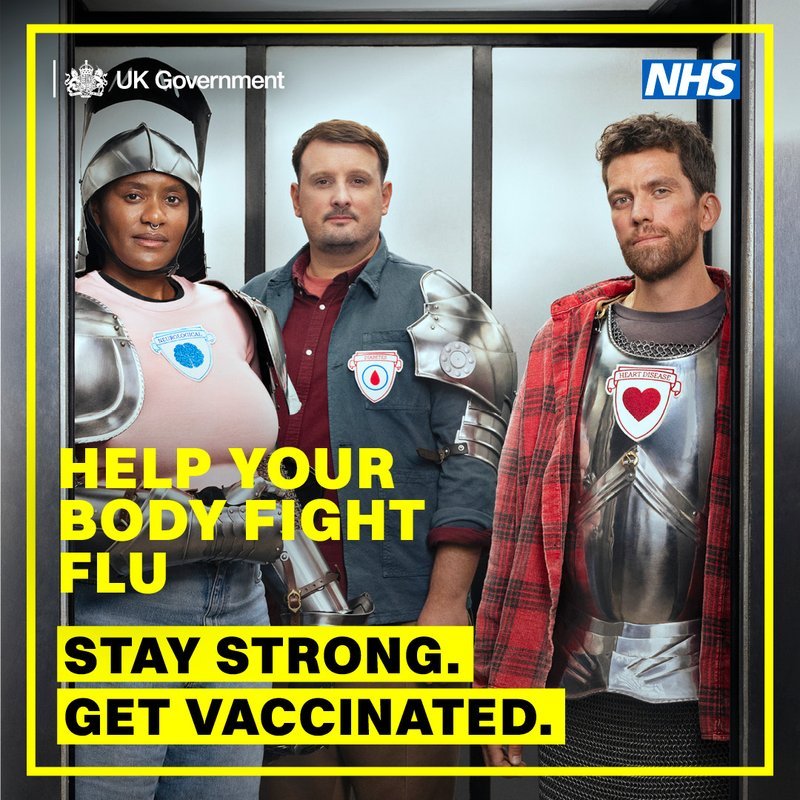
Winter always brings added pressure on our health and care systems — but the “winter illness” message can start to fade once December has passed. In reality, January and February are often when pressure peaks, and this is exactly when consistent, trusted community messaging helps most.
For VCSE organisations, community groups and local networks, the role you play here is simple but powerful: sharing clear, practical advice through channels people actually pay attention to — newsletters, conversations, drop-ins, food settings, activities, and frontline support.
Vaccination remains one of the strongest protections
Flu and COVID-19 vaccinations are not just an “autumn thing”. They can still be beneficial throughout winter, especially for people who are eligible and haven’t yet taken up the offer. The NHS guidance on winter health includes a straightforward overview of vaccines and wider steps people can take to stay well. nhs.uk NHS England also provides detailed information about who can access autumn/winter vaccinations and how to book. NHS England
Even small improvements in uptake can reduce pressure on services — including pharmacies, primary care, urgent care, and community support.
Reducing spread: small habits, big impact
Alongside vaccines, the basics still work — especially in busy community settings:
-
Stay home when unwell where possible (and encourage people to avoid close contact if they have symptoms).
-
Hand and respiratory hygiene (handwashing, tissues, disposing of them properly).
-
Ventilation, even in short bursts, in shared indoor spaces.
This is familiar guidance, but repeated reinforcement (in plain language) is what turns advice into behaviour.
Safe use of medicines and support routes
Many people manage winter illness symptoms with over-the-counter remedies. A useful reminder for communities is to check labels, especially where products already contain paracetamol, and avoid accidentally doubling up. The NHS winter health page includes accessible advice on winter wellbeing and self-care. nhs.uk
It can also help to remind people that pharmacies and NHS 111 can often be appropriate first steps, depending on symptoms — keeping A&E and urgent care available for those who really need it.
These resources are particularly useful for:
-
short social posts
-
newsletter-ready wording
-
consistent eligibility messaging
-
reinforcing prevention behaviours alongside vaccination
Keep sharing the message
Winter health messaging works best when it is visible, repeated, and delivered by trusted local voices. Even if people feel they’ve “heard it all before”, seeing it again from an organisation they trust can prompt action — booking a vaccine, staying home when unwell, or seeking advice earlier.
Additional Information
Use (and share) these links in your networks:
- Vaccination Flu and COVID-19 vaccine invitation – ages 16 to 74 with a weakened immune system
-
NHS winter health advice: https://www.nhs.uk/live-well/seasonal-health/keep-warm-keep-well/ nhs.uk
-
DHSC winter vaccines resources: https://campaignresources.dhsc.gov.uk/campaigns/vaccinations/winter-vaccinations/ Campaign Resource Centre
