

At our most recent Representatives’ and Reference Group meeting in May, the focus turned to something very tangible: the future of neighbourhood health estates in Leeds. This was led by our key speaker Georgia Young and you can view the slides (PDF) here.
This wasn’t a high-level policy discussion. It was a practical look at how neighbourhood health is starting to take shape on the ground, through buildings, locations and delivery models. At the same time, it raised some familiar questions about how this direction of travel will work in practice, and what it means for the VCSE sector.
This builds directly on the themes explored in our recent blog following the Health and Care session with Tim Ryley, particularly the shift towards neighbourhood health and more locally delivered care.
From Strategy to Physical Reality
A detailed overview was shared on the emerging strategic estates plan for Leeds. This is part of a wider national ambition to develop neighbourhood health centres as a key way of delivering integrated care.
In Leeds, the current proposal includes:
- a network of neighbourhood hubs aligned to local care partnership areas
- a smaller number of larger, multi-neighbourhood hubs with additional diagnostic capacity
- a mix of existing buildings and potential new developments
The plan is still at an early stage. It has been described as a “marker in the sand” rather than a final commitment, shaped under tight national timelines.
That means there is still space to influence how this develops.
A System Moving Quickly
One of the strongest messages from the discussion was the pace of change.
There is a clear push nationally to move forward quickly, often with limited time for local reflection or engagement. That creates a tension. On one hand, there is a need to secure funding and demonstrate progress. On the other, there is a risk that decisions move ahead without fully understanding what works for communities.
This reflects a wider point raised in the Tim Ryley session. The system is changing shape, with more responsibility sitting at place and neighbourhood level. But how that translates into reality is still being worked through.
Avoiding a Return to Medical Models
A key theme that came through strongly was concern about how these new centres might feel and function in practice.
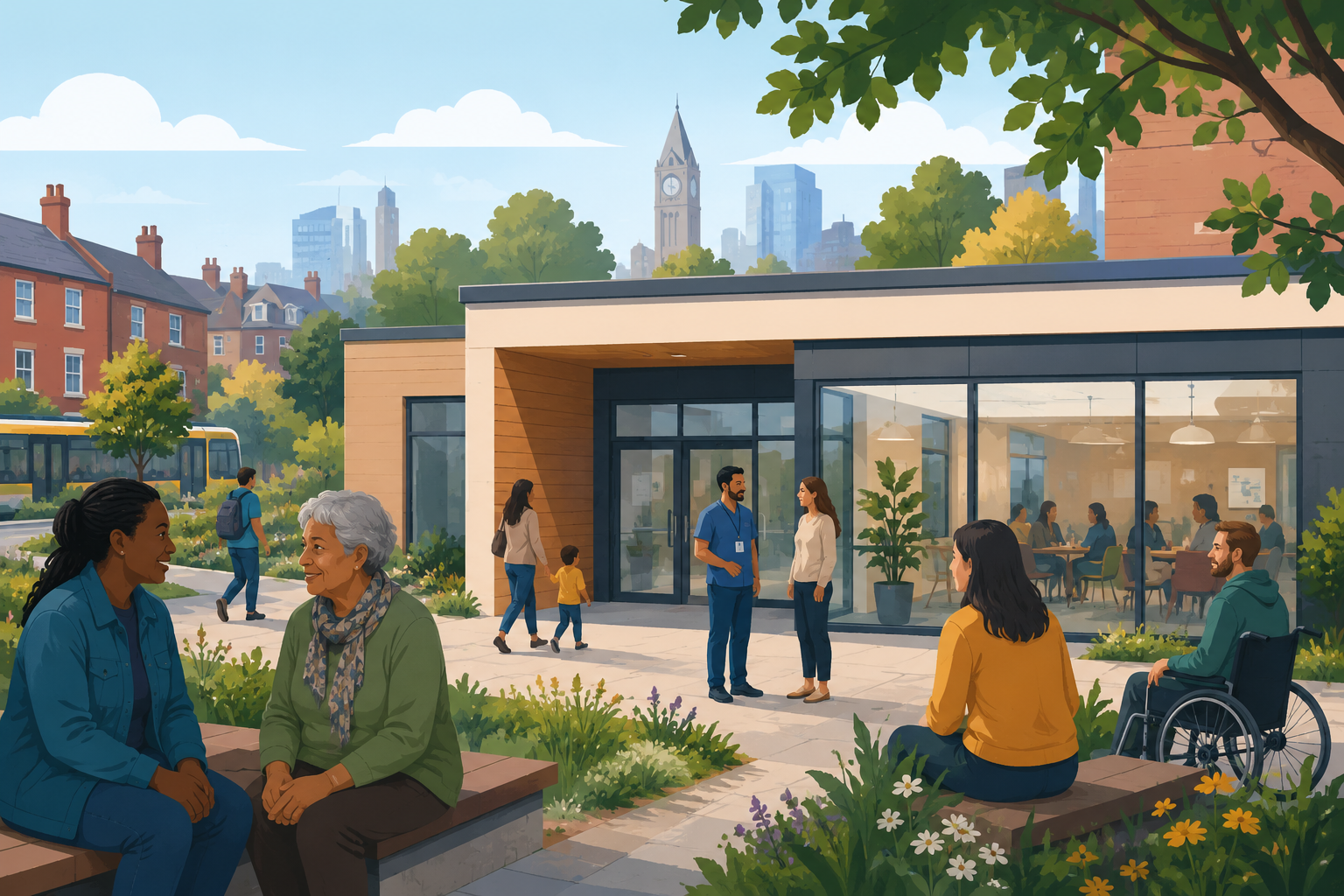
There was a clear message that neighbourhood health cannot become a smaller version of a hospital. If these spaces feel clinical or institutional, they risk reinforcing the very barriers the system is trying to reduce.
Instead, there was strong support for:
- community-based settings that feel welcoming and accessible
- greater involvement of VCSE organisations in how spaces are designed and used
- approaches that reduce, rather than reinforce, the medicalisation of support
As one contribution put it, there is a real choice in how services are delivered. They can be designed in a way that connects with communities, or in a way that distances people from them.
The Importance of Community Voice
Linked to this was a wider concern about engagement.
While there is a strong narrative around integration and neighbourhood working, there was a sense that this is not always matched by direct conversations with communities about what they want or need.
Examples were shared of areas where local partnership working is beginning to develop, but also where consultation has been limited.
This raises an important question. If neighbourhood health is genuinely about place, then how do we make sure local people shape what that looks like?
The Role of the VCSE Sector
The discussion also highlighted the ongoing challenge for the VCSE sector.
There is clear recognition that community organisations have a central role to play in neighbourhood health. But there is also a risk that, as structures develop, decision-making remains weighted towards statutory partners.
This connects directly to the question raised in the recent Health and Care session:
How does the VCSE sector organise itself to influence a system that is becoming more structured and aligned?
There was a shared sense that representation needs to be strong, coordinated and connected to the wider sector. The Reps and Reference Group itself will be looking at this more closely in future meetings.
What Happens Next
The estates plan will continue to develop over the coming months, with further detail expected as national and regional processes move forward.
For now, the key takeaway is that neighbourhood health is no longer just a concept. It is starting to take physical form.
That creates a real opportunity. But it also makes the stakes clearer.
If this is going to work, it needs to stay grounded in communities, shaped by local knowledge, and open to different ways of delivering support. The VCSE sector has a critical role in making sure that happens.
Link back to wider direction
This discussion sits alongside the broader shift explored in our recent blog on neighbourhood health and system change in Leeds.
Read more:
A shift towards neighbourhood health and VCSE leadership in Leeds
